

How it works
Reveal gives you two signals. Each one can start a workflow.
The Reveal switch on a page controls the Account Signal for that page. Pricing, demo, and
customer pages are the usual choice, because a visit there shows real intent.
Reveal identifies visitors. It does not show a list of them on its own. To act on an
identification, add a workflow that starts with an Account Signal or People Signal
trigger. The steps are below.
Before you begin
You need:- Admin access to your Default workspace. Only admins can open Signals.
- Your website connected in Signals, with the Pixel installed on every page you want tracked. Follow Set up the Pixel and Forms SDK if you have not done this yet.
- At least one visit to each page you want to reveal. Default discovers a page the first time the Pixel reports a visit to it. A page that nobody has opened is not in the list yet.
Website intent providers are available at an additional cost. Each identification uses
credits. Speak to the Default CS team to learn more. See
Enrichment providers for the provider list.
Turn on Reveal for a page
1
Open Signals
In the sidebar, under Automation, select Signals. The list shows every connected domain.
The Reveal enabled column shows how many pages on each domain have Reveal turned on.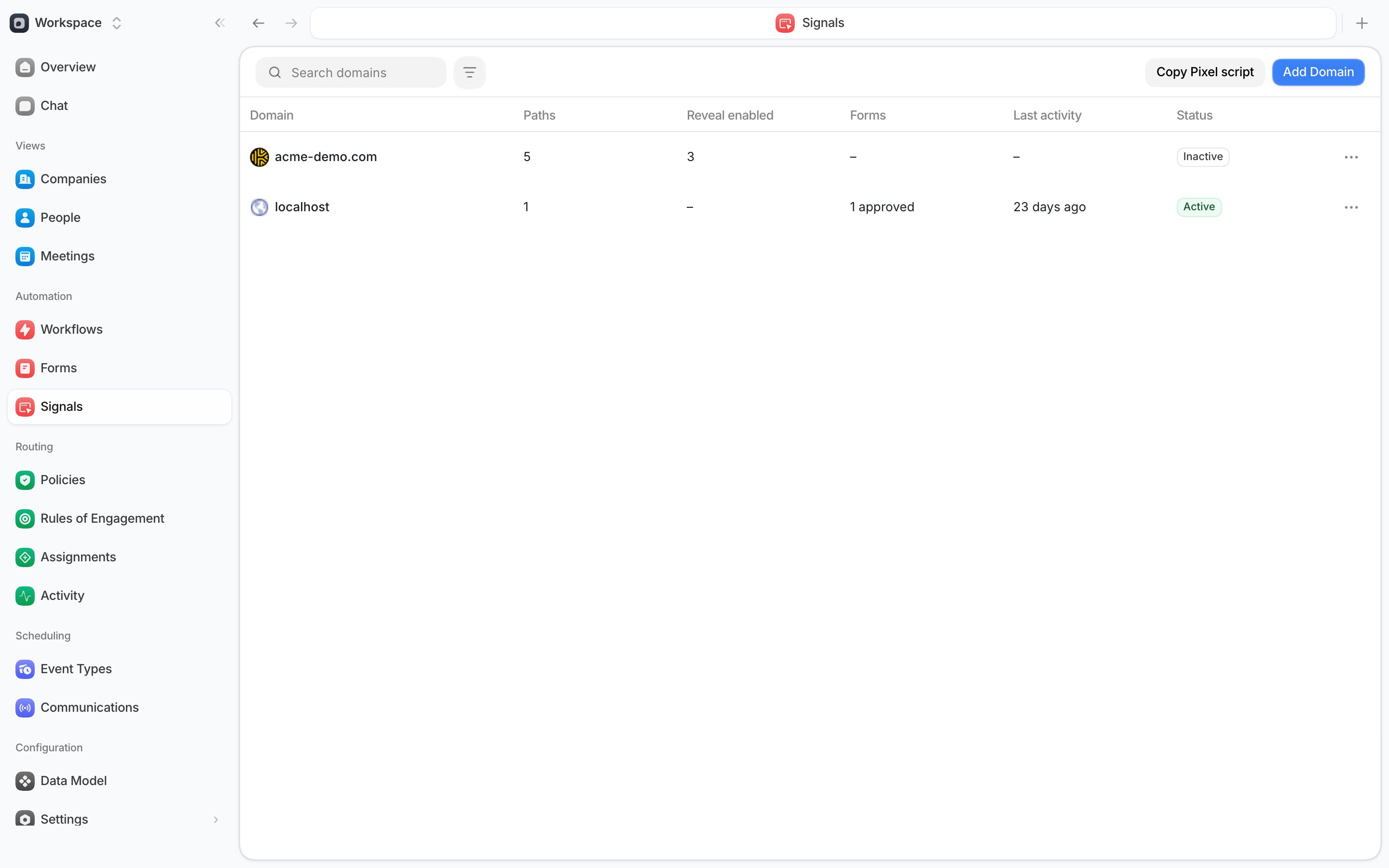
2
Open the domain
Select the domain row. A window opens with the Paths table. Each row is one page that
Default has discovered on the domain.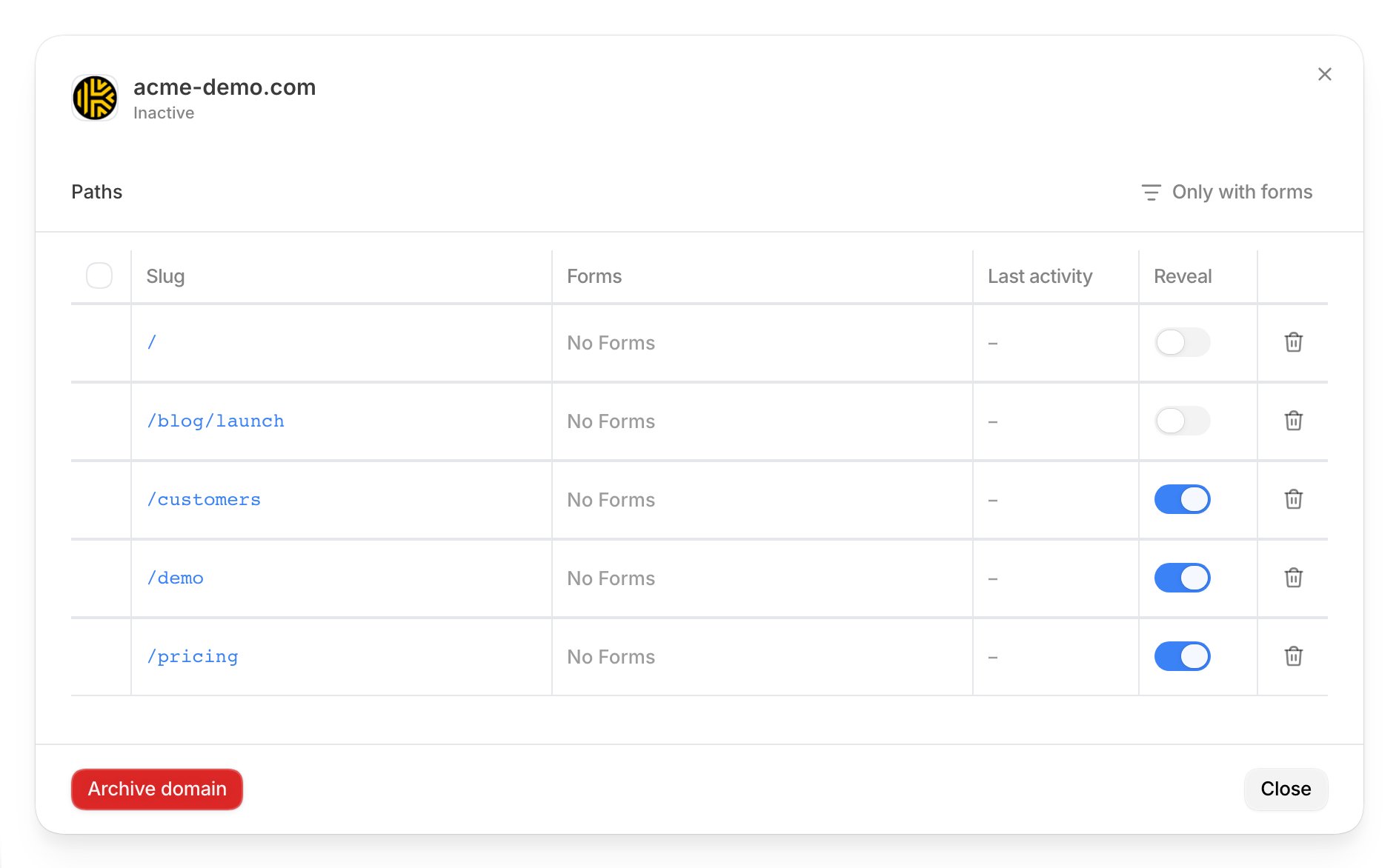
3
Turn on the Reveal switch
In the Reveal column, turn on the switch for each page you want to reveal. The change saves
immediately.To change many pages at once, tick the checkbox at the start of each row. A bar appears above
the table. Select Enable reveal or Disable reveal.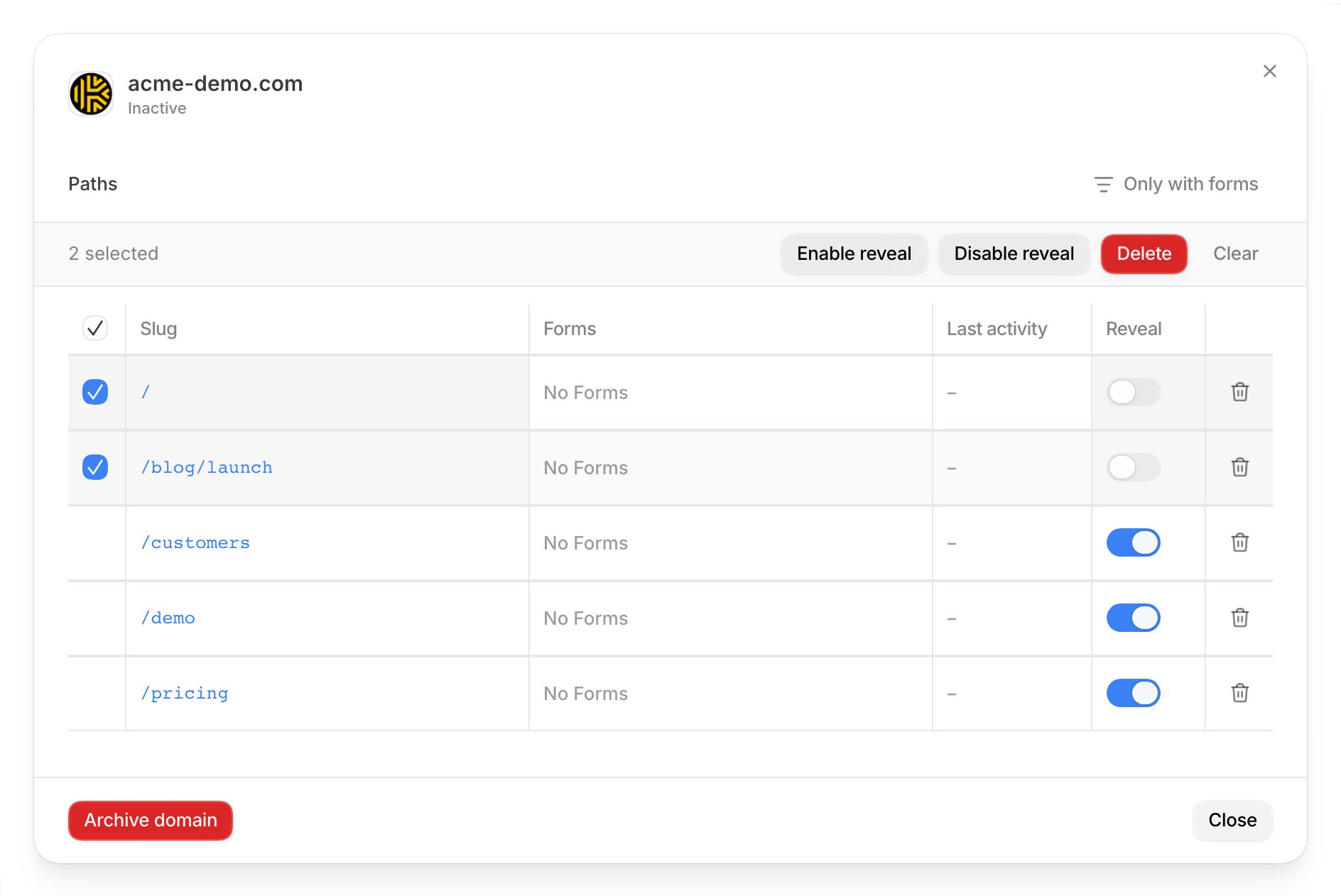
4
Close the window
Select Close. Back in the list, the Reveal enabled column shows the new count. Refresh
the page if the count has not updated yet.Reveal is now on. From the next visit on, Default identifies companies that open those pages.
Start a workflow when a visitor is identified
This is where Reveal becomes useful. The example below alerts sales when a company opens the pricing page.1
Create a workflow
Open Workflows and select Create new. Give the workflow a name, for example
“Alert sales when a target account visits pricing”.
2
Open the trigger picker
On the canvas, select the Add Node button (the plus icon in the toolbar on the left). Then
select Triggers at the top of the panel. Type “Signal” in the search box to find both
Reveal triggers.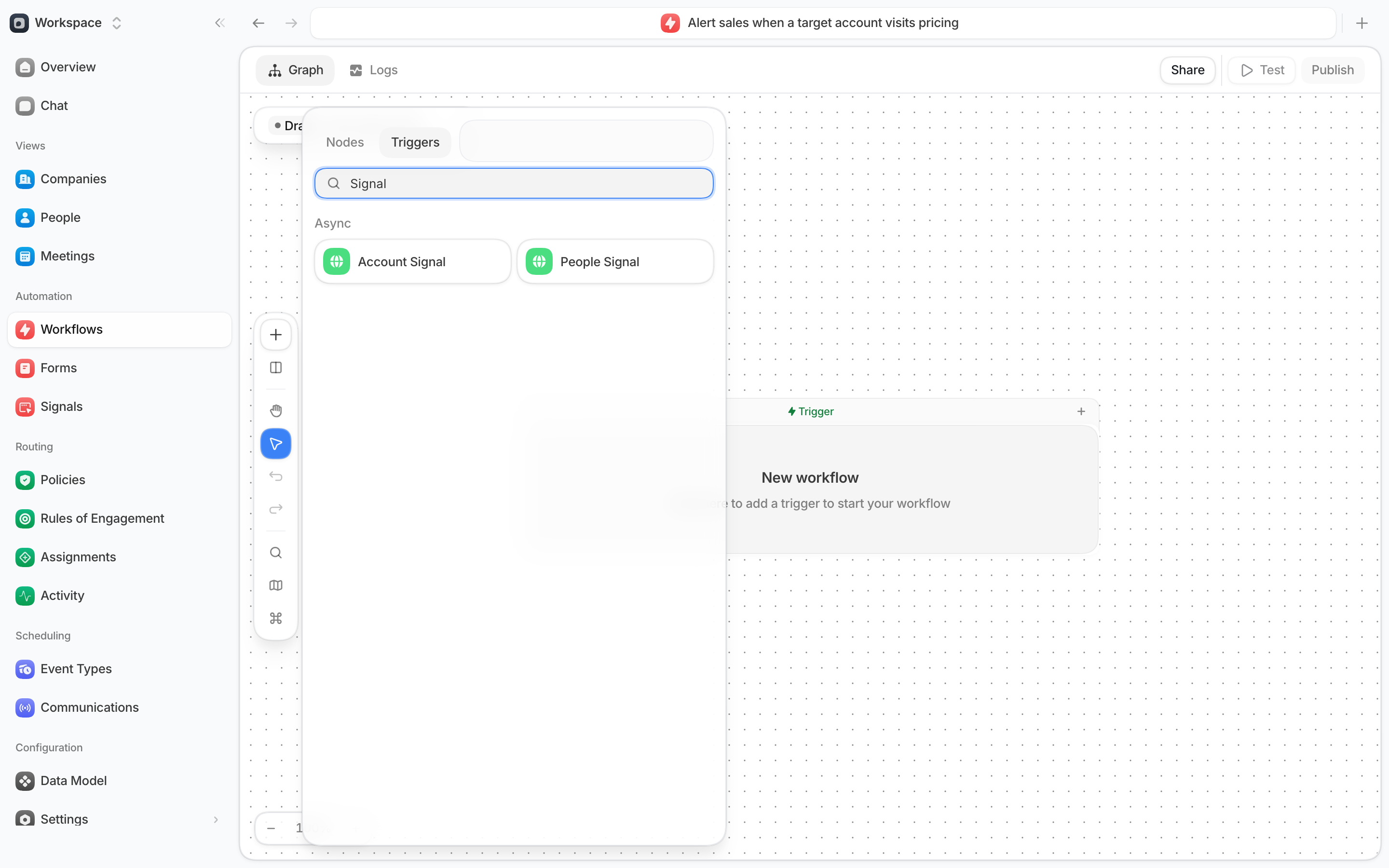
3
Choose Account Signal or People Signal
- Select Account Signal to start the workflow as soon as a company is identified on a page with Reveal on.
- Select People Signal to start the workflow when a person is identified. Results arrive in batches, about every 30 minutes.
4
Limit the trigger to the right visits
Both fields are optional. Leave them empty to fire for every identified visit.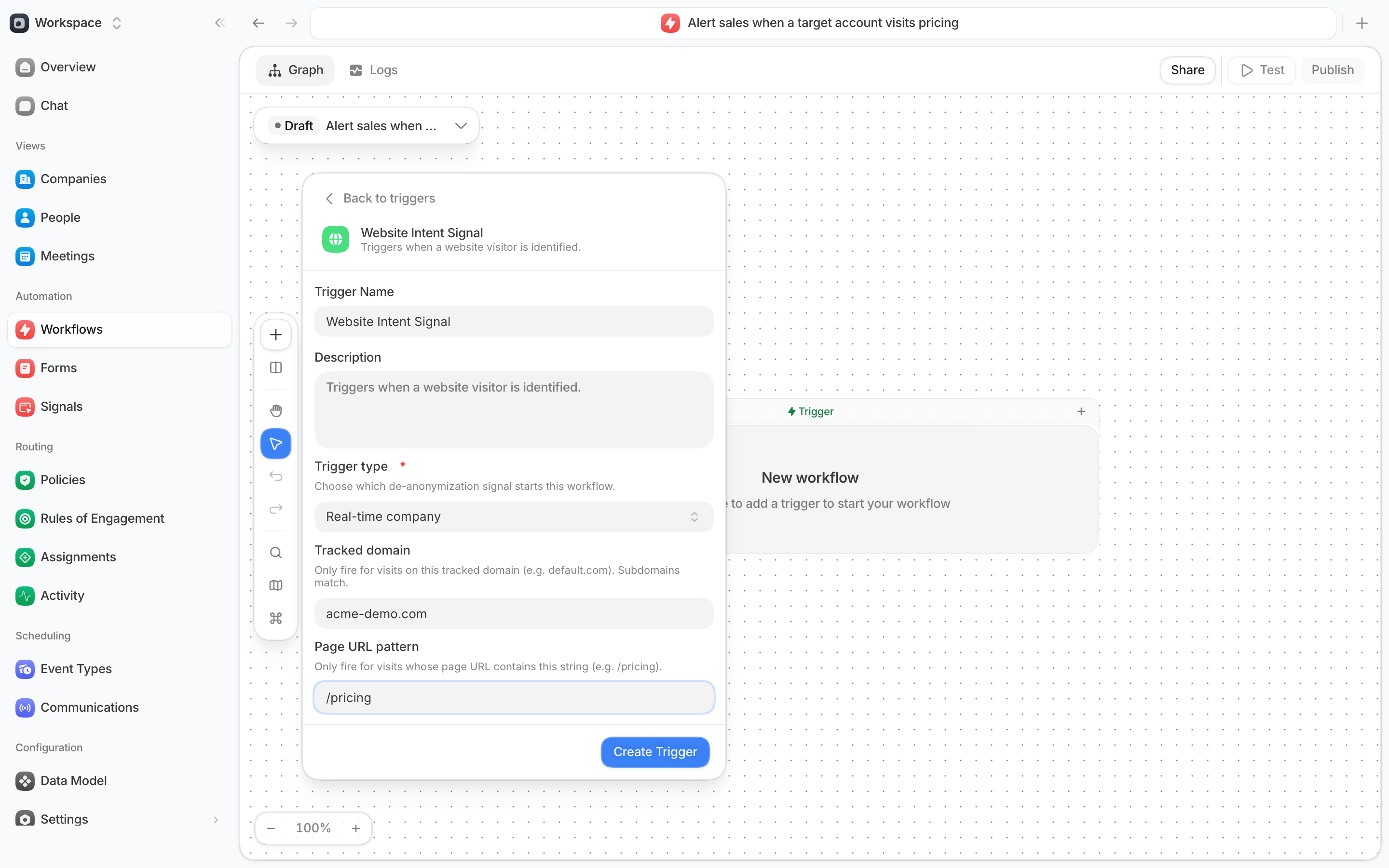
5
Add your steps and publish
The trigger appears at the top of the canvas. Select the plus below it to add the next step,
for example a Slack message to the account owner, an enrichment step, or a routing step. The
trigger gives later steps the company’s domain, and for People Signal also the person’s
name, title, and email.Select Publish when the workflow is ready. Reveal only starts published workflows.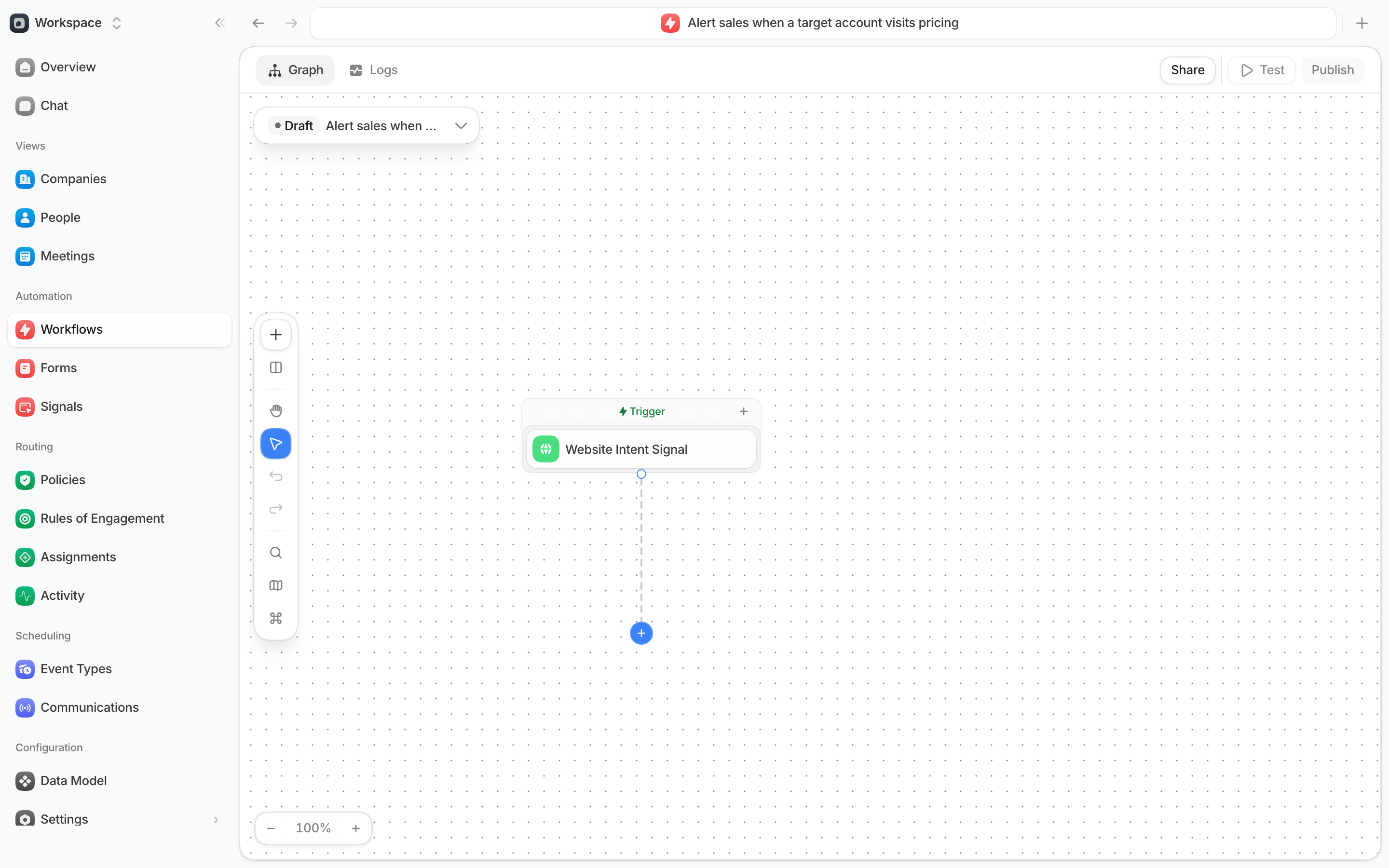
What to expect
- Not every visit is matched. Default can only identify a company when the visitor is on a network that belongs to that company. Visitors on home networks, mobile data, or a VPN often stay anonymous.
- One workflow run per company per hour. When the Account Signal identifies a company on a domain, the same workflow does not start again for that company on that domain for one hour, even if the visitor opens several pages. A return visit later in the day starts a new run.
- People Signal is not instant. Expect a person to be identified up to an hour after the visit.
- Identified people show on their record. Open the person in People, then the Activity tab, and filter by De-anonymized to see each identification and which provider made it.
- Consent is respected. If a visitor withholds analytics consent through your consent banner, Default receives no page views from them and the Account Signal cannot run. If they withhold marketing consent, the People Signal does not load. See Consent Gating.